Leaving their best until last
Part 13: 1937 New Zealand cricket tour of England

Another post-Test rush followed to be in Portsmouth to play Combined Services in an intended three-day game. The Services decided to bat first, but only middle-order batsman Richard Borgnis, a nephew of H.D. Leveson-Gower, whom the players were soon to meet, caused any issues with the bat as he scored 101 before he was caught and bowled by ‘Giff’ Vivian. The left-arm spinner took 3-59 and Jac Cowie 3-46 as the home team was out for 180. New Zealand struggled early as Jack Kerr, Bill Carson, Weir, and Lamason were all out cheaply. But Vivian scored 75 before he was run out, and Martin Donnelly scored 36. Tom Lowry added 22 and Norm Gallichan was 31, not out, as New Zealand was out just before stumps for 189. Borgnis completed a good day with 3-38.
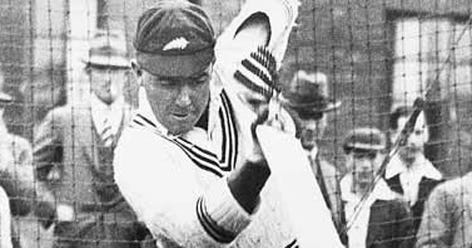
Tom Lowry prepares
The Services made a better start to the second innings, reaching 95-2, but then Cowie returned to take 5-36 in his second spell to dismiss them for 148. Vivian completed a sound double when finishing 64 not out, while Kerr, who, in his previous nine innings, had not made 20 runs, hit 49 in an opening stand of 103. Carson finished 18 not out as New Zealand passed its target in the 34th over for a nine-wicket win.
They [Combined Services] batted and started so confidently that I thought we would never get them out. Before lunch, they had 3-100. After lunch, they collapsed and were all out for 132. This left us 140 to win. When Kerr went at 99, I had to go in scrambling for a pair for the first time in my life. However, I was again confident and made 18 before we passed them.[1]
The game was completed within two days, providing a welcome day off. But that was soon forgotten on the first day against Hampshire. The home team belied the fact that they had lost their previous six games. They decided to bat first and were 393-8 at stumps. The following day, they were dismissed for 421, with Cowie taking 4-112 from 34 overs. Jack Dunning bowled 53.3 overs and took 2-127. Vivian was tight with his 30 overs, yielding 1-34.
Vivian’s form continued as he dominated the top order, scoring 112 – his first century of the tour.
Even though the Hampshire field was excellently placed and the fielding easily the best we have seen on the tour, Vivian proved just what a master batsman he is when he is in true form. His playing of his strokes was uncanny at times, and he rarely hit the ball to a fieldsman. His famous square-cut, as in the previous game at Portsmouth, was his best scoring stroke, helping him largely to gain the boundary 14 times during the little under two hours he was at the wicket.[2]
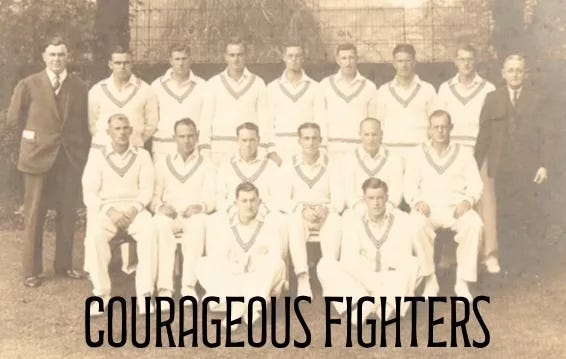
Moloney (32), Weir (56) and Carson (54) helped New Zealand reach 324 before they were dismissed. Weir and Carson added 113 for the second wicket to avoid the follow-on.
Neither was in such scintillating form as the left-hander [Vivian], but Carson, who is also a left-hander and of fine physique, frequently thumped the ball hard to leg and through the covers. He scored faster than Weir, taking 105 minutes for his 54, whereas Weir was in half an hour longer for 56 made out of 135.[3]
South African left-arm medium pacer Bill Creese took 6-81. Hampshire declared at 171-5 in their second innings, leaving New Zealand a target of 269. However, time was not on their side, and when the game ended in a draw, New Zealand had reached 165-5, ‘Sonny’ Moloney scoring 41, Donnelly 40 and Vivian 35.
The game with Canterbury, at Kent, proved one of the more exciting of the tour. New Zealand made a poor start and were 94-7, with only Moloney’s 40 of any substance among the top order. But Alby Roberts (55) and Eric Tindill (38) helped them finish on 186. However, Kent made light of that with veteran Frank Woolley hitting 79. He gave the New Zealanders a demonstration of his class. He was keen to take on Cowie and was described as being in ‘one of his most aggressive moods’ as he took a toll on him, especially off the back foot.
Woolley hooked Roberts for two 4’s in his first over, and although Vivian kept changing his three fastest bowlers from one end to the other, Woolley treated them all in much the same way.[4]
Woolley gave two chances from Cowie; the second was edged to the slips, and he set off for the pavilion before he found the chance was dropped. But Roberts finally had him caught by Dunning. At stumps on the first day, they were 213-2. The second morning was more successful. Cowie took 4-88 and Roberts 4-110; they were all out for 321.
In their second innings, New Zealand managed 300 in quick time, the first 90 runs scored in an hour, dominated by Moloney’s 75, Walter Hadlee’s 47, Tindill’s 40, 34 from Vivian and 31 from Kerr. That left Hampshire needing 166 to win. Carson described the action.
At lunch, they had 120-2. And it just looked like letting them knock them off, but what a finish it was. Ames was caught in slips first ball after lunch, and Cowie bowled Chalk, thus they had four down and still needed 40 runs. Roberts bowled Chapman and Levett and had Valentine caught behind while Roberts caught Todd one-handed in slips – a most brilliant catch. They had eight wickets down and needed 30 runs. Harding was caught behind by Tindill off Cowie, and the last man came in [Claude Lewis], and they wanted 16 runs. Both were shaking like leaves but managed to snick fours. When five runs were needed Cowie bowled a ball to Wright, which hit his bat and ran hard up against the stumps, yet didn’t move a bail. A minute later Lewis hit a four, and it was over. It was easily the best game we have played in.[5]
The New Zealanders revelled in the settled weather, and the action continued against Sussex in what Merv Wallace felt was one of the side’s better efforts against a strong county. Sussex chose to bat first but was dismissed for 151, and by stumps, New Zealand already had a first-innings lead at 176-5.
On the Monday, nearly everyone made runs, and we carried our score to 546, the record score for the tour. I made 111, Donnelly 83, Roberts 82, Moloney 75 and Hadlee 76. Too often, one man would get runs, and most of the others fail. This time we all ‘clicked’ together. Then we put them out in their second innings for 163 and in two days had beaten one of the strongest county sides by an innings and 237 runs. Lowry was captain in this match, and he handled the bowlers brilliantly. He made frequent changes, and everything went right. Donnelly, Cowie and Roberts were the main factors in getting rid of them so cheaply, Donnelly taking four for 32 [they would remain his career-best figures].[6]
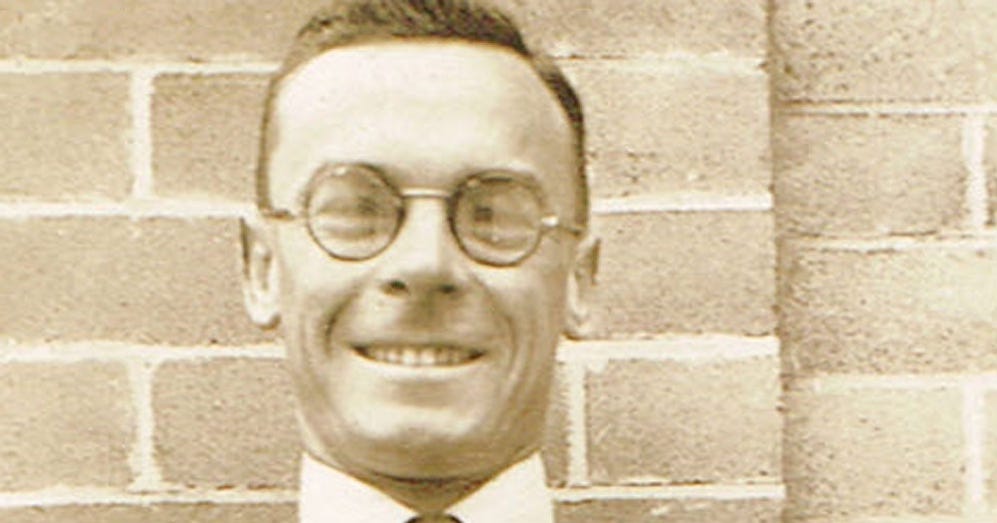
Walter Hadlee [Carson collection]
Wallace batted at seven in the order and was joined by Roberts at 300-6. Wallace reached his century in 120 minutes, 99 made in 105 minutes. Dismissed for 111 with New Zealand 391-7, Roberts was joined by Moloney. Roberts posted 50 after 100 minutes, while Moloney took only 35 minutes. When they were all out after 360 minutes, they had hit 546.
Lowry demonstrated his captaincy eccentricity in Sussex’s first innings. He replaced Cowie with Moloney at one end of the ground. At the other, Dunning was replaced by Vivian. Moloney bowled one over, and then Cowie returned. After one over, he was replaced by Roberts, who gained a wicket. He was then replaced by Moloney for the next over at that end.
The game had one moment of hilarity during Sussex’s second innings. Former Test bowler Maurice Tate was batting when he complained about light reflecting from car windscreens behind the bowler’s arm. First, one umpire, and then the second, asked spectators if the owner was among them to move the car. When they pointed out which car it was, Tate had to leave the ground for a moment to move his car, the guilty vehicle. Another stoppage occurred when the Caledonia, the trans-Atlantic flying boat, crossed the ground with players and spectators alike following its progress.
As their tour wound down, they faced one more stern challenge, a game against an England XI selected by Pelham Warner at Folkestone. However, in choosing the side, there was disappointment expressed to Lowry that some players were not getting a fair go.
Shocks came the next day. Gallichan was left out for the third game in succession, and [Jack] Lamason for the third time in four games. There was a proper bust-up about it, and both had a piece of Lowry. However, nothing could be done, and neither Lamason, Weir, nor Gallichan have had a fair spin. The team has been terribly, even criminally, handled, and I think, as do the others, that Lowry is a terrible manager. We got the England XI out for 462. The order for batting was Hadlee, Kerr, Wallace, and Donnelly. However, as it was 10 to six, Hadlee and Tindill opened, and I was sent in next, just like a lamb to the slaughter. When the England XI came in at 6.10 the next day and lost 2-20, they didn’t alter their order. However, I was terribly wild at this and hit three fours out of 13 and then got caught on the boundary at fine leg, having swung the fast bowler high. I didn’t bat in the second innings as the original order was adhered to. I don’t want to bat again here as it is just murder going into bat, having no confidence whatsoever.[7]
The home team decided to bat first. Cowie trapped Harold Gimblett for 54 to claim his 100th wicket on the tour. The England XI’s tail wagged after they were 295-7. Seven-cap Test batsman Bryan Valentine scored 102, and Percy Chapman was 61 not out, to see them all out for 464. New Zealand was 40-2 at stumps after day one. The next morning, Hadlee (34) and Wallace (17) were dismissed before Moloney and Kerr added 233 for the fifth wicket. Wallace said Kerr, who passed 1000 runs for the tour, was now looking at his best consistently and always scoring runs, and their partnership was the best of the tour. They each notched centuries, Moloney 140 [his first of the tour] and Kerr 112. New Zealand was all out for 431. Moloney especially delighted the side.
Moloney, having scored 75 against Kent and another 75 against Sussex, reached his great ambition of a century, his first on the tour, scoring 140. It was one of his best innings. He played all the bowling with freedom and certainty, did not give a chance, and played a wide variety of strokes. His driving, cutting, and gliding were alike faultless and he made his runs at a good pace. Seventeen fours were among his strokes.
Kerr drove and cut beautifully in making 112. In the last month of the tour, he showed his top form, batting as he did in New Zealand against the team led by E.R.T. Holmes in 1935-36. It was unfortunate for the side that he could not find the same high skill in May and June. Had he batted then as he did in August and September the team would have had the reliability and solidity at the top of the batting order for which it was vainly searching, and there would have been a different tale to tell of the third New Zealand team’s tour of England.[8]
Only Bill Edrich (67) and Wally Hammond (63) made substantial contributions before the declaration was made at 186-9 – a lead of 219.
We had scored 182 for two wickets when stumps were drawn, and just missed a win. Donnelly and I were still together with 74 and 40 respectively, but the wicket was worn and it was hard to force the pace. Even so, had we not had to stop early to get our train for Gainsborough, we would certainly have got the runs and a win.[9]
They had scored at just under 90 an hour but fell 38 short. When interviewed after the game, Page said the team was tired as they had lost only six days to rain since the start of the tour.
This meant that Saturday cricketers, and they are not more than that at home, have had to play without ceasing. The toll on the men’s feet was so severe that, as Page said: ‘I have seen our batsmen come in at lunch and lie down for the whole interval instead of eating. Without the 40 minutes’ rest they would not have been able to go out again’.[10]
The only possible reason they met Minor Counties in Gainsborough was that it made the connection to Scarborough to play H.D.G. Leveson-Gower’s XI less demanding. The 219 miles from the south coast to just south of Doncaster in the north had necessitated the early end of a game New Zealand could have won. The Minor Counties decided to bat first and made 310 runs, mainly based on their 120-run opening stand and 78 not out down the order by the winner of the ‘most initials for an opponent on the tour’, Thomas Stanislaus Alfred Charles Joseph Maxwell. His 78 not out was the highest score of his two-game first-class career. His next highest was one. With Cowie rested, Roberts (4-35) and Donnelly opened the bowling, but Gallichan did the most damage, taking 5-52 from his 32.1 overs.
Kerr hit 160, the highest individual innings of the tour, after losing Hadlee for a duck, adding 174 runs for the second wicket with Weir, who hit 79. The rest of the batting had a distinct end-of-tour feel, and New Zealand was out for 337. After Dunning and Roberts bowled nine overs without success, the ball was thrown to Carson and Gallichan immediately. Gallichan completed 10 wickets for the match when taking 5-20 from 11 overs, and while Carson may have been having issues with his batting, his bowling and fielding were on song. He took 4-20 and three catches.
Carson also bowled with plenty of life, and made the ball ‘move’ disconcertingly, with the result that in less than an hour and a half the whole side were dismissed for 76 runs…In taking Nutter’s wicket, the bail was knocked 32 ½ yards.[11]
Carson said his 15 fast overs in the first innings were better than he had bowled in his career.
They are all amateurs and of a fairly high standard; consequently, they liked themselves a wee bit. We soon had them going and cleaned them out for 76. Which left us 50 to win. This we did with three wickets down. Lowry had one of his usual jokes and made the three chaps who scored ducks go in. Lamason lost the toss from me and went in first. He went out first ball in the first innings and didn’t do any better in the second, thus getting a pair for the match and the first in his career. Did he curse. I was lucky enough to stay till the end with 14 not out because I think they didn’t bowl straight. In this match, I did some really fine bowling. In all, I bowled 15 overs and 10 overs, taking 1-66 in the first and 4-20 in the second…I was bowling nearly as fast as Cowie. In the second, I clean bowled three and had one caught in the slips. They have realised too late that I probably would have made quite a good change bowler. In fact, I have finished up second in the averages with 14 wickets, but that means nothing as Cowie, Dunning and Moloney were the best bowlers on our side.[12]
It was still nearly three hours on a train to travel north to the festival match that would end the tour, Wallace saying it was their most enjoyable game because of the carefree atmosphere. Chock-full of international quality players, the home team chose to bat first and scored 380, with most batters getting a start with 40-Test veteran Bob Wyatt top scoring with 98, and their second Test nemesis Freddie Brown scoring 65. Gallichan and Moloney took three wickets apiece. New Zealand replied with 285, 68 of them to Hadlee. Wallace said it was one of the best innings of the tour, given the bad wicket and the ball flying. Weir made 50, while at nine and 10 in the order, Lowry was 39 not out and Cowie 36, his career-best score to that stage, as they added 74 runs for the ninth wicket.
Leveson-Gower’s XI were dismissed for 206 as Roberts took 5-47 and Gallichan 4-56. The New Zealanders struggled throughout their chase of 302 to win and were dismissed for 156, Hadlee (55) and Donnelly (32) being the best of the tourists. During the game, several members of the side witnessed an air crash during the King’s Cup flying race in which two airmen were killed.
With some reluctance, the side had to leave Scarborough because it was much more enjoyable than London for the last few days of the tour. However, more horrendous travel was required of them as they crossed England to travel to Ireland for their final game.
NEXT: Irish surprise, and the England tour reviewed
[1] Carson letter, 20 August 1937
[2] Special representative, New Zealand Free Lance, date unknown
[3] Bournemouth Echo, 21 August 1937
[4] The Times, Special Correspondent, 29 August 1937
[5] Carson letter, 29 August 1937
[6] Wallace, NZ Observer, 27 January 1938
[7] Carson letter, 6 September 1937
[8] Wallace, ibid
[9] ibid
[10] Thomas Moult, Daily Telegraph, 4 September 1937
[11] Gainsborough Evening News, 7 September 1937
[12] Carson letter, 12 September 1937