Cricket's bowling workloads still an issue

Subscribing to the view that there is nothing new under the sun, and thinking about the injury rate that makes New Zealand’s Test cricketers especially vulnerable, it is almost inevitable that bowling load should enter the conversation.
New Zealand’s depth of Test class players is low enough at the best of times, that losing two bowlers to injury in their first Test against the West Indies, and then the loss of another in the second Test, highlighted issues that are never far from the surface.
The inability of Nathan Smith and Matt Henry to play a role in the second innings in Christchurch required such a load on the two fast-medium bowlers Jason Duffy and Zak Foulkes that they could yet suffer the effects of that in the second or third Tests.
Debate abounds on what are the best workloads for bowlers, and has done for years.
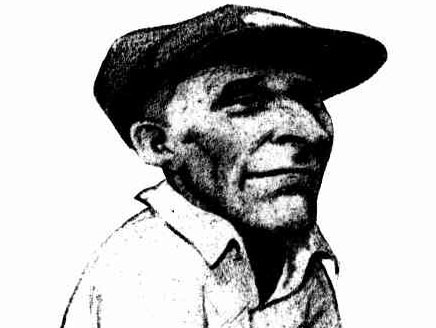
Leg spinning maestro Clarrie Grimmett in 1929 [Picture: Table Talk]
England ace and one-time Test wicket world record holder Fred Trueman swore that consistent bowling, on an ascending scale through a season, was a bowler’s best preparation.
Biomechanists and fitness experts have mushroomed with a variety of methods in the years since Trueman’s days. Ice baths, stretching and any number of exercises have emerged, yet the injuries still occur.
No superior system has emerged, because if it had everyone would be using it.
Some technicians in the game have their own views. New Zealand-born Australian leg spinner Clarrie Grimmett, still the second-best wicket-taker [behind Richard Hadlee] produced by this country with 1424 across his career, offered his thoughts in 1932, halfway through his international career.
Grimmett said every player’s efficiency on the field was ruled by their muscle condition. Players needed to look after themselves from the start of each season. He highlighted his views based on his experience.
Until I first took up my residence in Adelaide I have never had a rub down in my life, and did not need one. As events turned out, I had a tremendous lot of work in the bowling line for the State side. It was during one very strenuous match on a particularly hot day that I was persuaded to have a shower and rub down in the interval.
This was the start of my being rubbed down, and for some seasons I continued to receive this sort of treatment from men engaged for that purpose.
I will admit it was soothing and very refreshing after hard day’s work but there are other considerations that outweigh these. The main one is that the more rubbing I had, the more I felt I needed.
And if it was not done regularly my muscles became very tight.[1]
Grimmett said it was while he was on tour in New Zealand with an Australian side, where massage was not customarily provided at cricket that he found his muscles were in a terrible condition and affecting his play.
This made me think. I then realised that I did not continue to have regular treatment my muscles tended to get very hard. I thereupon decided that during the next season I would do without any massage work at all.
Since then I have had strenuous seasons in Australia, and have toured England, in the course of which I have bowled a tremendous number of balls.
During this period I have never had a rub down, and am in perfect muscular condition.[2]
Grimmett said the method he developed was at his first practice of a season he bowled about 50 balls, and would increase the number at each practice after. He didn’t get sore or stiff and didn’t need a rub down.
Anyone who uses a certain set of muscles a lot, and then spells through the winter must feel stiff on starting to use them again. This, then, should be a warning. A player should not impose too much strain on his muscles by a lot of bowling at his first practice.
A gradual working into proper condition is important, and the chances of injury are not so great.[3]
Grimmett did not discount the value of massage for other certain injuries.
He added that warming up the muscles with exercises, especially on cold days, was important.
In bowling a ball there are only certain muscles used. The movement is always in the one direction.
It is therefore a great help in strengthening the opposite muscles to exercise the arm, in warming it up, by moving the arms in the reverse way to that used in bowling.[4]
One of the most useful exercises bowlers and batters could do was walking because in strenuous play the feet needed to be looked after. Thick, clean socks were important while bathing the feet in cold water was refreshing.
Walking exercise is the finest training you can have. If your feet are able to stand up to it, you have the best asset you can have for strenuous match play.
I always do a lot of walking exercise during the winter, and this tends to keep my feet in good condition for the strenuous season ahead.[5]
Footwear was also important. Boots should be properly sprigged, but not too heavy. However, they should be heavy enough to offer support for the feet. Thin soles jarred on hard grounds and an inner sole was often of value to reduce jarring.
Grimmett said that while some of his comments might seem related to minor things, little details contributed exponentially to a bowler’s success.
Grimmett played in an era when the demands on bowlers were significantly more than is the case in modern times. The excess of limited overs cricket has diminished the work load on bowlers, but there is no evidence it has made life easier for them.
Bowling eight ball overs in Australia, bowling long spells in touring teams to England and South Africa and becoming the most successful Test bowler of his era, Grimmett’s experience makes his observations more than pertinent.
But will cricket programmes ever allow the opportunity for workloads to be the basis of fitness again?
[1] Clarrie Grimmett, Sporting Globe, Melbourne, 30 January 1932
[2] ibid
[3] ibid
[4] ibid
[5] ibid